
FINALLY. The government has announced a mandatory reading test for every 13-year-old in England – and for every child who slipped through the net in KS2, this might just be the moment we’ve been waiting for.
I want to talk about those children for a minute.
You know the ones. They sat in your classroom, quiet and capable, masking brilliantly. They’d developed clever strategies – asking a friend, memorising rather than decoding, avoiding anything that meant reading aloud. They weren’t disruptive. They weren’t obviously struggling. And so, in the busy, beautiful chaos of primary school, they didn’t get picked up.
And then there’s the other one. The child for whom the shame of not being able to read became so overwhelming, so quietly unbearable, that the only way they knew how to express it was through their behaviour. The one who was labelled “disruptive”, “defiant”, “a handful” when really, underneath all of it, they were just a kid who was terrified of being found out. Those children didn’t slip through the net quietly. They got noticed for all the wrong reasons.
They moved up to secondary carrying a gap nobody had named.
This is not a story about failure. It’s not about blame. It’s about a system that, until now, didn’t have a formal moment to catch what it missed. Year 8 changes that.
For the first time, every child at 13 will be assessed on reading fluency and comprehension. Not to shame anyone. Not to publish league tables. But to give schools – and the children themselves – the information they need to actually do something.
And this is where it gets exciting.
Because catching up isn’t the impossible task it used to feel like. We know so much more now about what works. The science of reading is clear: structured, systematic phonics, the kind that builds decoding skills from the ground up, works at any age. The idea that phonics is just for five-year-olds is one of the most damaging myths in education.
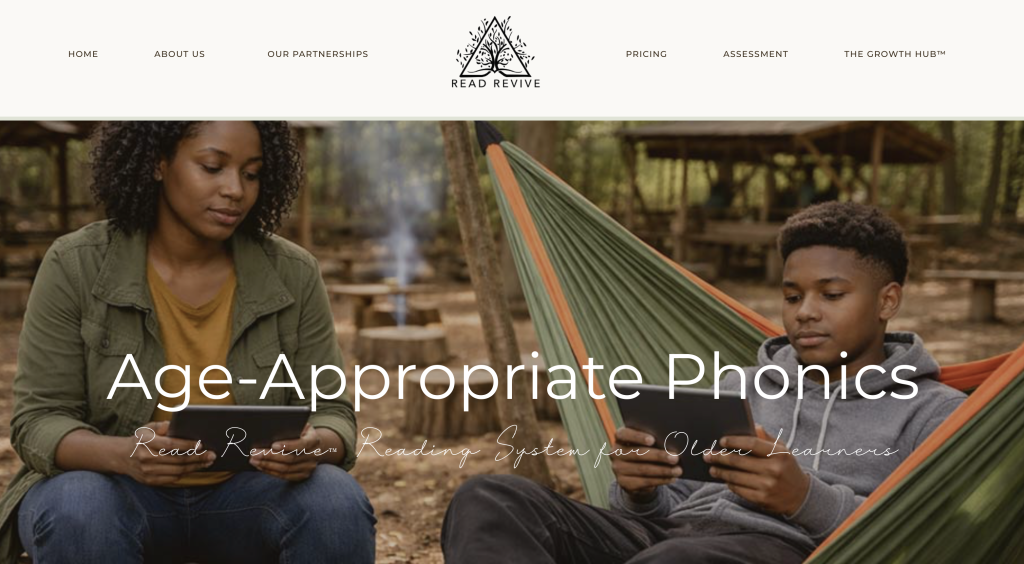
A Year 8 student who missed those foundations doesn’t need a dumbed-down version of learning. They need something age-appropriate, genuinely engaging, and fast-paced enough to close the gap without making them feel like a child. That’s a very specific brief.
It’s exactly the brief that Read Revive was built around.
Read Revive is digital phonics designed for the children we missed. Age-appropriate, structured, and actually enjoyable.. because a 13-year-old who has spent years feeling like reading isn’t for them needs to be won over, not just taught. Our programmes meet students where they are, move at a pace that builds confidence quickly, and don’t look or feel like the resources their younger siblings are using.
The Year 8 test isn’t a crisis. It’s a spotlight.
It’s the system finally saying: we see these children. We’re not letting them leave school still carrying this gap. And for every teacher who has always known these kids were there – who wanted to help but lacked the right tool – this is your moment too!
2026 is already the National Year of Reading. The government is investing in phonics frameworks, reading culture, and now formal assessment at secondary level. The direction of travel is clear, and it’s the right one.
The children we missed in KS2 deserve a second chance.
Read Revive is ready to help you give them one.
If you’re a SENCO, a literacy lead, a form tutor, or a headteacher thinking about how to get ahead of the Year 8 reading assessment – let’s talk.